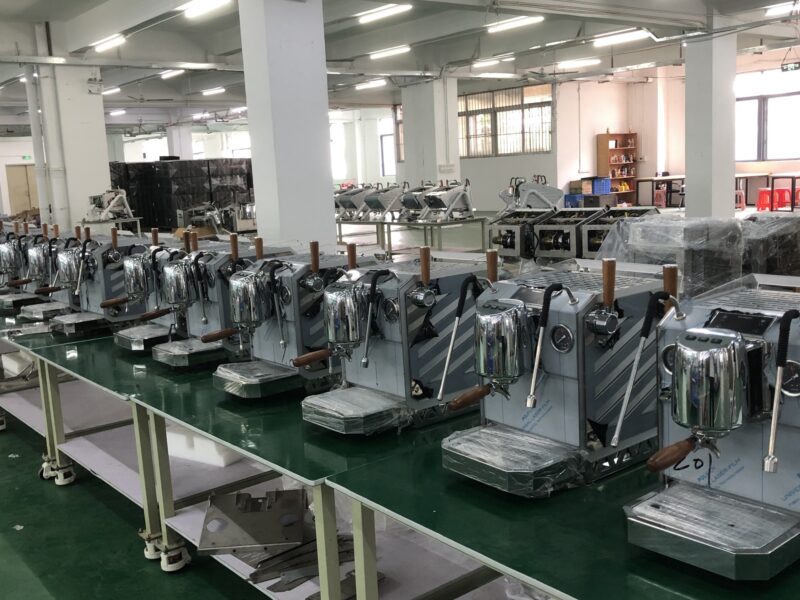
Coffee is no longer just a morning ritual — it’s an immersive experience. As consumer expectations rise and competition intensifies, coffee machine manufacturers are racing to adopt technologies that elevate performance, efficiency, and user experience. In this article, we dive into the latest trends in coffee machine innovation, explore how smart features are redefining the category, and show how these advancements shape the future of coffee culture.
1. Smart & IoT-Enabled Coffee Machines
The integration of Internet of Things (IoT) features into coffee machines is one of the most visible shifts. These devices allow remote monitoring, firmware updates, predictive maintenance, and usage analytics. For example, café owners can receive alerts when maintenance is needed — eliminating unexpected downtime and preserving machine longevity.
Some advanced models even adjust brewing parameters (temperature, pressure, flow rate) based on ambient conditions (humidity, temperature). This real-time optimization helps deliver consistent taste across fluctuating environments.
👉 For high-precision equipment, see our Espresso Machine product page .
2. AI & Machine Learning Enhancements
Beyond connecting machines, many next-gen models incorporate machine-learned algorithms. Over time, they optimize extraction curves based on user feedback and historical data. This means a machine can refine the “ideal shot” for a specific roast or bean type.
Additionally, AI-based monitoring can detect anomalies — irregular flow rates or turbidity that hint at channeling, clogging, or pump inefficiencies — before they escalate.
According to verified market research, the Smart Coffee Machine Market size is forecasted to grow at a CAGR of 10.3% from 2026 to 2033, reaching USD 2.8 billion by 2033. Verified Market Reports
3. Multifunction & All-in-One Brewing Platforms
Coffee machines are evolving into all-in-one platforms. Next-gen platforms support multiple brewing methods (espresso, drip, pour-over, cold brew) within one body. Some integrate automatic milk frothing, steam temperature control, and self-cleaning routines.
This versatility appeals to boutique cafés, coworking spaces, and small restaurants seeking to consolidate their equipment footprint.
4. Sustainability & Energy Efficiency
Sustainability is no longer optional. Forward-looking machines feature energy-saving modes, heat recovery systems, and smart standby. Manufacturers also use eco-friendly internals, modular designs for repairability, and recyclable materials.
The global coffee machine market is projected to grow at a CAGR of 4.7% from 2023 to 2030, reaching USD 9.26 billion by 2030. Grand View Research
5. Connectivity & Ecosystem Integration
Modern machines often integrate with café management systems, POS, loyalty apps, and inventory software. Envision a machine that communicates with your POS: billing a drink upon extraction, logging bean/water usage, and triggering reorder when levels drop.
This transforms a machine from a standalone appliance to a node in a smart café ecosystem.
6. Compact & Modular Designs
With real estate at a premium, manufacturers are designing compact, modular machines. These machines allow in-field swapping of modules (e.g. pumps, boilers, grinders), reducing downtime and total cost of ownership (TCO).
7. Digital Experience & Touchless Interaction
User interface design is rapidly evolving. High-resolution touchscreens, voice prompts, and app control are now table stakes. In the post-pandemic era, touchless operation — via QR code, mobile app, or gesture — is becoming the expected norm.
A refined UI/UX now plays into brand differentiation and customer satisfaction, not just control.
🧭 Implications for Manufacturers & B2B Buyers
A. Differentiation via Smart Features
If you manufacture components (e.g. sensors, firmware modules), embedding IoT or AI capabilities provides strong differentiation. Buyers increasingly expect “smart readiness” as standard.
B. Service & After-Sales as Revenue Streams
With remote diagnostics and predictive maintenance, manufacturers can monetize service plans, software upgrades, and data analytics — shifting part of the business from hardware to recurring software/service.
C. Export Considerations
For global markets, firmware must support multi-language UI and regional power standards (110V / 220V / 240V). If machines use mobile connectivity, ensure SIM / NB-IoT modules comply with local telecom protocols.
D. Synergy with Ingredient Suppliers
Coffee machines don’t operate in isolation — they form a system with coffee, milk, syrups, non-dairy creamers. Aligning designs with high-quality formulations improves outcomes. For instance, our Non-Dairy Creamer line (link to your non-dairy creamer page) is optimized for stable microfoam performance in smart espresso systems.