1. Introduction: Why Process Design Matters
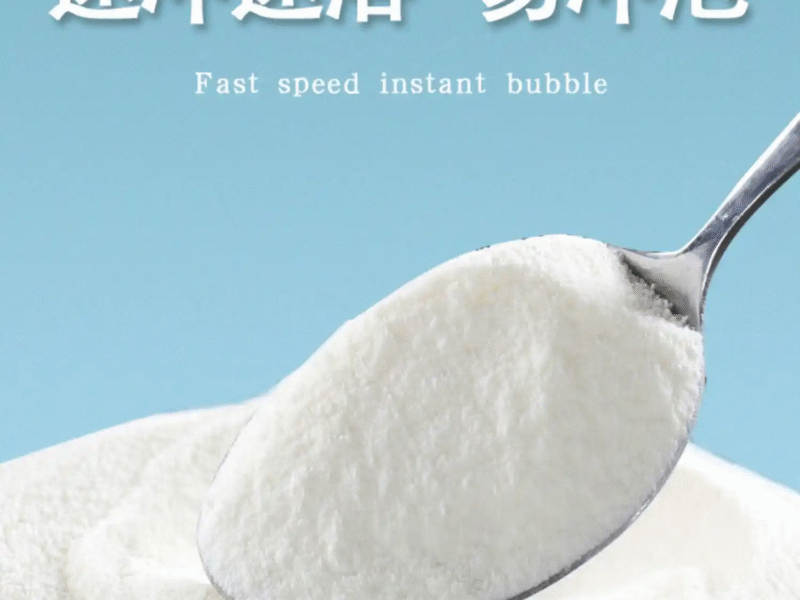
In large-scale beverage ingredient manufacturing, non-dairy creamer (植脂末) is one of the most technically demanding powders to produce. It must achieve instant solubility, long shelf life, stable whiteness, and a rich mouthfeel — all at an industrial scale.
Behind each bag of powder lies a complex emulsion science process involving heat transfer, drying kinetics, and fat encapsulation.
Factories that master this process gain huge advantages in cost efficiency, flavor consistency, and export reliability.
According to Statista’s 2025 non-dairy creamer market data, the global market is projected to grow steadily past US $7.8 billion by 2026 — and competition increasingly depends on technical production capability, not just price.
2. Raw Material Selection: The Foundation of Quality
The production of non-dairy creamer starts with ingredient engineering.
| Ingredient | Industrial Role | Key Technical Consideration |
|---|---|---|
| Vegetable Oil (Palm kernel, Coconut, or Sunflower) | Provides fat phase | Melting point must remain between 24–27 °C for solubility |
| Carbohydrate Carrier (Maltodextrin, Glucose syrup solids) | Encapsulates fat droplets | Dextrose Equivalent (DE) determines sweetness & flowability |
| Emulsifiers (Mono/diglycerides, Sodium caseinate) | Stabilizes oil-water interface | Determines emulsion stability and spray atomization |
| Stabilizers & Anti-Caking Agents | Prevent agglomeration | Often include dipotassium phosphate or silicon dioxide |
| Flavor Components | Dairy aroma or neutral note | Must withstand heat at 180 °C during spray drying |
High-end producers use non-hydrogenated oils and low-trans-fat formulations for global compliance, as confirmed by FoodNavigator’s 2024 ingredient insights.
Factories can explore formulation standards on our Milk Tea Ingredient Product Page.
3. Pre-Processing: Emulsion Preparation
Before drying, the goal is to create a stable oil-in-water emulsion.
A. Emulsion Mixing
- Oils are heated (50–60 °C) to become fully liquid.
- Emulsifiers and stabilizers are dissolved in warm water under agitation.
- Carbohydrate base is added gradually to prevent lumping.
The mixture is then passed through a high-shear homogenizer at 100–150 bar to achieve uniform droplet size (1–5 µm).
B. Heat Treatment
This pasteurized emulsion (≈ 80–85 °C for 10–15 s) kills microbial contaminants and improves film formation during spray drying.
💡 Tip: Over-homogenization can break emulsifier structure, reducing whitening power.
Read more in ScienceDirect’s spray drying overview.
4. The Spray Drying Process
Spray drying transforms the emulsion into a shelf-stable, free-flowing powder.
Step 1 — Atomization
The liquid is pumped into a spray nozzle or centrifugal atomizer, creating fine droplets. Nozzle pressure (60–120 bar) defines final particle size.
Step 2 — Hot-Air Drying
- Inlet temperature: 170–190 °C
- Outlet temperature: 80–90 °C
Rapid evaporation forms a thin encapsulating shell of carbohydrate around the oil droplet — the key to oxidation resistance and instant solubility.
Step 3 — Separation & Cooling
Powder is separated via cyclones or bag filters, then cooled to below 30 °C to avoid caking.
Step 4 — Sieving & Packaging
Powder is sieved (typically through 100–200 mesh) to ensure uniform granulation, then filled into multilayer foil-lined kraft bags.
The final product moisture should be ≤ 3 %, ensuring up to 24 months of shelf life when stored properly.
Learn more about this in our Non-Dairy Creamer Storage Guide.
5. Process Control and Critical Parameters
| Parameter | Target Range | Why It Matters |
|---|---|---|
| Moisture Content | 2.0–3.0 % | High moisture reduces flowability & shelf life |
| Bulk Density | 0.35–0.50 g/cm³ | Affects packaging & solubility rate |
| Fat Globule Size | 1–5 µm | Smaller droplets = stable whiteness |
| Particle Uniformity | CV < 15 % | Ensures even dissolution |
| Color (Whiteness Index) | ≥ 90 | Aesthetic requirement for milk teas |
| Oxidation Index (Peroxide Value) | < 0.2 meq/kg | Determines freshness & safety |
Factories that maintain tight process control (Cpk > 1.33) can achieve consistent product quality across large production batches.
6. Process Equipment Overview
Industrial non-dairy creamer lines generally include:
- Mixing System – heated stainless tanks with agitators
- Homogenizer – 100–150 bar pressure, dual-stage for fine droplet size
- Pre-heater / Pasteurizer – plate-type exchanger to control microbial load
- Spray Dryer – tower with top or bottom spray nozzles, depending on product viscosity
- Cyclone Separator & Bag Filter – powder recovery system
- Cooling Conveyor & Vibrating Sieve – ensures uniformity
- Automatic Packaging System – nitrogen-flushed filling line
Advanced plants integrate PLC control systems to monitor humidity, airflow, and drying kinetics in real time.
Explore case studies of automated lines in GlobalData’s food processing technology insights.
7. Common Production Challenges and Solutions
| Issue | Cause | Technical Solution |
|---|---|---|
| Caking during storage | High residual moisture | Lower outlet temperature or improve cooling efficiency |
| Uneven color / poor whiteness | Overheating during drying | Adjust inlet air flow or atomization pressure |
| Oil separation during reconstitution | Incomplete emulsification | Increase homogenization pressure or emulsifier ratio |
| Burnt flavor | Excessive inlet temperature | Reduce heat or increase feed rate |
| Low solubility | Over-dried surface crust | Modify spray nozzle to improve particle porosity |
Regular sensory and physicochemical analysis helps detect early deviations before scaling issues occur.
8. Post-Processing and Quality Assurance
A. Packaging Integrity
Non-dairy creamer absorbs moisture easily. Use multi-layer foil bags with nitrogen flushing to prevent oxidation.
B. Quality Testing
Each batch should undergo:
- Moisture & fat analysis (gravimetric + Soxhlet)
- Particle size distribution (laser diffraction)
- Whiteness test (colorimeter L-value)
- Microbiological test (TPC < 100 cfu/g)
- Sensory evaluation for aroma and texture
Results are consolidated into a Certificate of Analysis (COA) to meet OEM and export requirements.
Factories implementing HACCP and ISO 22000 systems can dramatically reduce quality variation.
Read more on our About Us page for certifications and R&D overview.
9. Process Optimization and Innovation Directions
To stay competitive, manufacturers are investing in:
- Cold-soluble creamers for iced beverages — using micro-encapsulation and modified starch carriers.
- Plant-based protein emulsifiers replacing sodium caseinate for vegan markets.
- Low-trans-fat formulations with high-oleic oils.
- Inline drying control using NIR moisture sensors.
- Energy-efficient spray dryers recovering 15–20 % waste heat.
A Mintel innovation report shows that R&D-driven creamer producers outperform price-driven competitors in long-term contracts.
10. Conclusion: From Emulsion to Excellence
Producing high-performance non-dairy creamer is not just mixing oil and sugar — it’s precision engineering that blends food chemistry, thermodynamics, and process control.
Factories that optimize emulsion stability, drying parameters, and quality analytics create a product that dissolves instantly, performs consistently, and travels globally without loss of flavor.
If you’re developing an OEM product or upgrading your line, explore our OEM Non-Dairy Creamer Solutions or contact our technical team for process consultation.
👉 Let’s turn formulation science into your next market advantage.
Visit our Contact Page for technical specifications and partnership details.