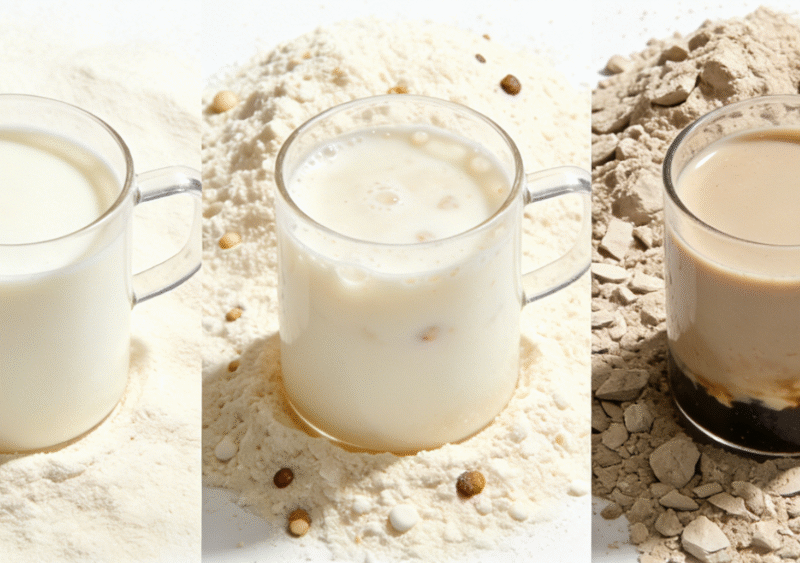
Choosing the right non-dairy creamer is critical for your product’s success. As a buyer, you need a reliable method to evaluate quality quickly and effectively. Here is a practical, step-by-step guide to help you distinguish premium non-dairy creamer from substandard products.
Key Takeaway: High-quality creamer should deliver instant solubility, superior stability, a clean flavor, and consistent performance in your specific application.
The 3-Step Quality Evaluation Framework
Follow this simple framework during your sample testing phase to make an informed decision.
Step 1: Visual & Sensory Inspection (The First Impression)
Start with a basic inspection of the powder and its dry mix.
- A. Appearance & Color:
- Good Quality: Fine, uniform, free-flowing powder with a consistent, bright white or creamy off-white color. No visible lumps or discoloration.
- Poor Quality: Uneven particle size, clumping, a dull grayish tint, or the presence of foreign particles.
- B. Aroma & Dry Taste:
- Good Quality: A clean, neutral, and slightly sweet or milky aroma. No sharp chemical, burnt, or rancid odors.
- Poor Quality: Strong, unpleasant odors (oxidized oil, starch) or excessive sweetness, indicating low-quality raw materials or processing issues.
Step 2: Performance & Solubility Test (The Core Test)
This is the most critical step. Simulate real-world conditions.
- A. Solubility & Dispersibility:
- Cold Water Test: Add a spoonful of creamer to a glass of cold water (5-10°C) and stir. Premium creamer will disperse quickly without clumping and dissolve almost completely with minimal agitation.
- Hot Water Test: Repeat with hot water (80-85°C), simulating coffee or soup preparation. High-quality creamer should dissolve instantly, leaving a smooth, homogenous liquid with no residue or oily film on the surface.
- What to Look For: Clumps, settling at the bottom, or an oily slick on top indicate poor emulsification and low-quality ingredients.
- B. Whitening Power & Color:
- Dissolve a standard amount (e.g., 1g) into a black coffee or tea base. Compare the whiteness and opacity.
- Good Quality: Provides strong, pleasing opaqueness with a natural creamy hue.
- Poor Quality: Weak whitening effect, may appear watery or have an unnatural bluish or grayish tint.
Step 3: Stability & Application-Specific Tests
Evaluate how the creamer performs under stress and in your final product.
- A. Heat & Acid Stability (For RTD Beverages, Soups):
- Prepare a solution with creamer.
- Adjust the pH to 4.0-4.5 (using citric acid) to simulate an acidic environment like coffee or fruit drinks.
- Heat the solution and hold it at 85-90°C for 15-30 minutes.
- Good Quality: The solution remains stable, smooth, and homogenous with no protein coagulation, flocculation, or oil separation.
- Poor Quality: The solution curdles, separates, or becomes grainy.
- B. Mouthfeel & Flavor Carry:
- Taste Test: Prepare a standard beverage and evaluate.
- Mouthfeel: Should be smooth, creamy, and rich, not thin, chalky, or greasy.
- Flavor: Should have a clean, neutral finish that enhances the primary flavor (coffee, tea, soup) without adding unwanted aftertastes (starchy, metallic, or artificial).
- Benchmarking: Always test against your current creamer or a known high-quality benchmark sample side-by-side.
- Taste Test: Prepare a standard beverage and evaluate.
Red Flags & Common Quality Issues
| Issue | Likely Cause | Impact on Your Product |
|---|---|---|
| Persistent Clumping | Poor spray-drying, low-level emulsifiers. | Inconsistent mixing, customer complaints. |
| Oily Film/Separation | Inadequate emulsification, low-quality fats. | Poor appearance, reduced shelf life. |
| Curdling in Acid/Heat | Protein source not suited for low pH. | Product failure in RTD beverages. |
| Chalky or Greasy Mouthfeel | Incorrect carbohydrate/fat balance. | Unpleasant consumer experience. |
| Off-Flavors | Rancid oils, low-grade ingredients, over-processing. | Ruins the flavor profile of your final product. |
Partner with a Manufacturer That Guarantees Quality
The best way to ensure consistent, high-quality non-dairy creamer is to partner with a reputable manufacturer with transparent processes and rigorous controls.
At kalin trading, we don’t just sell powder; we deliver certified, application-grade solutions.
- Consistency Guaranteed: Our automated spray-drying process and FSSC 22000 certified quality management system ensure every batch meets the same high standard.
- Customized for Your Needs: We pre-test our creamers for specific parameters (solubility, heat/acid stability, mouthfeel) tailored to your application—be it coffee, bakery, or RTD beverages.
- Technical Support & Sampling: We provide comprehensive samples with detailed technical data sheets and are ready to conduct joint application tests to ensure perfect performance in your product.
Ready to put our quality to the test?
Contact us today to request a free sample kit and experience the difference that a premium, reliable non-dairy creamer can make for your production line and your brand.
Learn more about our quality commitment: https://kalintrading.com/contacts/
Explore our related ingredient solutions: https://kalintrading.com
For official methods on food powder analysis, refer to resources from the American Association of Cereal Chemists (AACC): .